

HIFU vs RF Skin Tightening: Which K-Beauty Lifting Treatment Is Right for You?
I still remember sitting in a consultation room in Gangnam, watching a nurse pull up a laminated brochure with about six different device logos on it, and thinking: I just want tighter skin. Why does this feel like picking a phone plan?
If you’ve spent any time researching K-beauty’s anti-aging scene, you’ve probably run into the same wall. Every clinic seems to push a “combo package” — HIFU plus RF, always sold together, always described as if they do the same thing. They don’t. And once you understand what each one actually does to your skin, the whole decision gets a lot less confusing.
So let’s actually break it down.
What HIFU Is Doing Under Your Skin
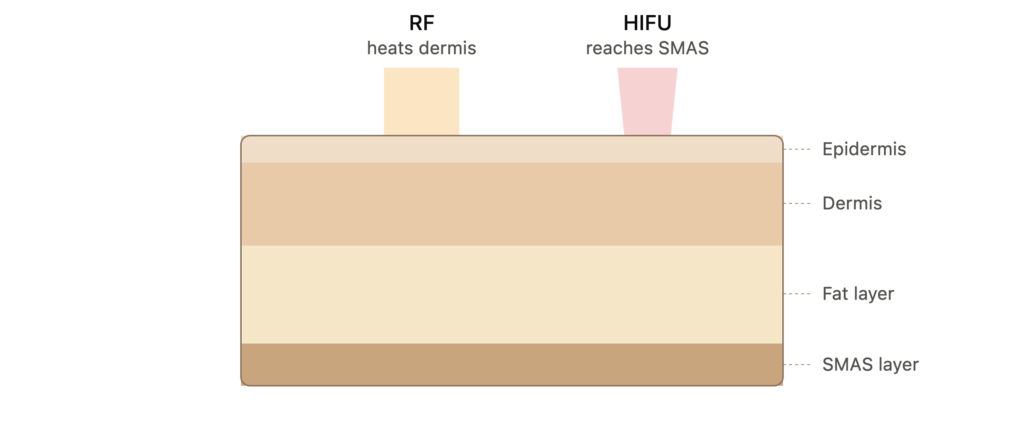
HIFU stands for High-Intensity Focused Ultrasound, and the name is basically the mechanism. It fires focused ultrasound energy deep enough to reach the SMAS layer — the same structural layer surgeons tighten during a facelift, sitting well below your dermis, closer to muscle than skin.
The device creates tiny points of thermal coagulation at very specific depths, and your body responds by triggering a wound-healing cascade: fresh collagen production, gradual tissue tightening, a lift that builds over the following two to three months rather than showing up overnight. Ulthera is the name most people recognize internationally, though Korean clinics also run devices like Doublo and Shurink, each with slightly different depth settings.
Here’s the part that surprises people: HIFU treats the support structure, not the surface. It’s why it’s marketed for jawline definition and brow lift more than for smoothing fine lines.
What RF Is Doing Under Your Skin
Radiofrequency works on a completely different layer. Instead of ultrasound waves reaching deep tissue, RF uses electrical currents that heat the dermis — the collagen-dense layer just under your skin’s surface — to a controlled temperature that triggers fibroblasts (the cells that produce collagen) into overdrive.
It’s shallower than HIFU, which is exactly why it hurts less and comes with next to no downtime. Thermage is the RF name most people know, and Oligio has become something of a phenomenon in Korean clinics over the past couple of years for its more comfortable sessions. Some RF devices, like Infini, combine radiofrequency with microneedling to push the energy in even more precisely.
Where HIFU lifts, RF tends to tighten and refine — smaller pores, smoother texture, that slightly “snapped back” look people describe after a good RF session.
HIFU vs RF, Side by Side
| HIFU | RF | |
|---|---|---|
| Target layer | SMAS (deep, muscle-adjacent) | Dermis (mid-layer, collagen-rich) |
| Best known for | Lifting, jawline definition | Tightening, texture, pore refinement |
| Pain level | Moderate to noticeably uncomfortable | Mild, often described as just warm |
| Downtime | Minimal, occasional tenderness | Essentially none |
| Sessions typically needed | 1, repeated every 6–12 months | 3–5, spaced a few weeks apart |
| When results show | Gradual, over 2–3 months | Faster, often visible within weeks |
Why Korean Clinics Almost Always Sell Them Together
This part actually makes sense once you see the layers involved. HIFU rebuilds the deep scaffolding your face relies on for structure. RF works on the collagen network sitting closer to the surface. Combined, you’re addressing two separate causes of an aging or tired-looking face at once — the sagging that comes from deep tissue loss, and the surface dullness that comes from a slowing collagen cycle.
It’s not purely a sales tactic, even if it sometimes gets marketed that way. But — and I think this matters — not everyone needs both. If your main concern is jawline sagging, HIFU alone might be enough. If you’re mostly bothered by texture and pore size with minimal sagging, RF alone could do the job without the extra cost of a combo package.
So Which One Is Actually Right for You?
Here’s how I’d think about it, based on what each treatment is actually built to do:
If you’re in your late 20s to early 30s and just starting to notice early laxity or want to stay ahead of it, RF alone is often plenty. Your skin still has decent structural support — you’re maintaining, not rebuilding.
If you’re noticing real jawline or jowl sagging, HIFU is the one doing the heavy lifting (literally). RF can complement it, but skipping HIFU here usually means you won’t see the lift you’re after.
If budget is a real factor, know that HIFU tends to be priced per session and isn’t cheap, while RF is often sold in multi-session packages. Ask your clinic to price them separately before agreeing to a combo — some will bundle at a genuine discount, others just bundle.
If you have very sensitive or reactive skin, RF’s gentler profile makes it the easier starting point. You can always add HIFU once you know how your skin responds to in-office treatments generally.
None of this replaces an actual consultation. A good dermatologist will look at your skin in person and tell you honestly whether you need both, one, or neither yet — and if a clinic pushes you toward the most expensive package without examining your skin first, that’s worth noticing.
What to Do for Your Skin Afterward
Both treatments create controlled micro-inflammation, which means your skin is temporarily more sensitive and more in need of support than usual — even though visible downtime is minimal.
For the first week or so, I’d lean on:
- A soothing, barrier-focused serum — something centella or cica-based to calm any residual heat sensitivity
- A fragrance-free, ceramide-rich moisturizer to support the barrier while your skin is in repair mode
- A high-SPF mineral sunscreen, non-negotiable, since treated skin is more UV-reactive for at least a few weeks
[Insert your tested product recommendations and affiliate links here — this is a natural spot for a “what I personally used after treatment” callout.]
Quick Questions People Actually Ask
Does HIFU or RF hurt more? HIFU, by a fair margin for most people. It’s reaching a deeper layer, and clinics will often offer numbing cream beforehand. RF is usually described as just uncomfortably warm.
Can I get both in the same visit? Yes, and it’s common — clinics typically do HIFU first, then RF, since HIFU targets the deeper layer.
How long do results actually last? HIFU results are generally reported to last 6–12 months before another session is needed. RF tends to need more frequent touch-ups, but the sessions themselves are easier to fit into a regular skincare routine.
Is one of these definitively “better” for anti-aging? Not really — they’re solving different problems. The honest answer is that “best K-beauty anti-aging” treatment depends entirely on what your skin is actually doing, not which device has better marketing.
This article is for informational purposes only and isn’t a substitute for a consultation with a licensed dermatologist. Individual results, suitability, and risks vary — always consult a qualified professional before booking any in-office skin treatment.

- SKIN BENEFITS: Medicube PDRN Pink Peptide Serum delivers targeted care with a luxurious formula designed to nourish, hyd…
- LASTING HYDRATION: Experience deep, long-lasting moisture that absorbs beautifully without greasy residue, keeping skin …
- DAILY ESSENTIAL: Perfect for daily skin care routines, suitable for various skin types. An ideal addition to any beauty …
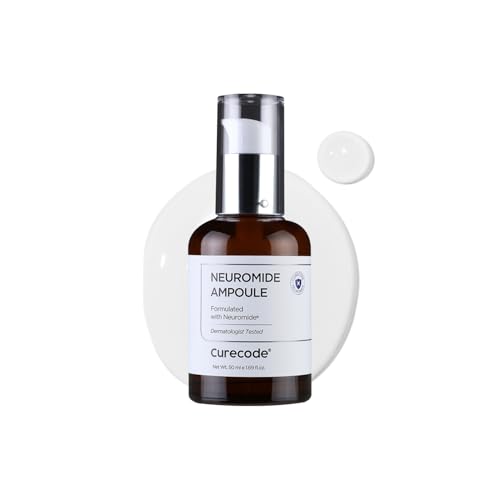
- INTENSE MOISTURE & SKIN BARRIER REPAIR – Formulated with a powerful combination of Ceramide and Neuromide to deeply hydr…
- PREMIUM NIACINAMIDE GLOW & RADIANCE – Infused with high-performance Niacinamide to brighten dull skin, refine uneven ski…
- ANTI AGING & FINE LINE MINIMIZER – Concentrated anti aging formula targets early signs of aging, smooths skin texture, a…
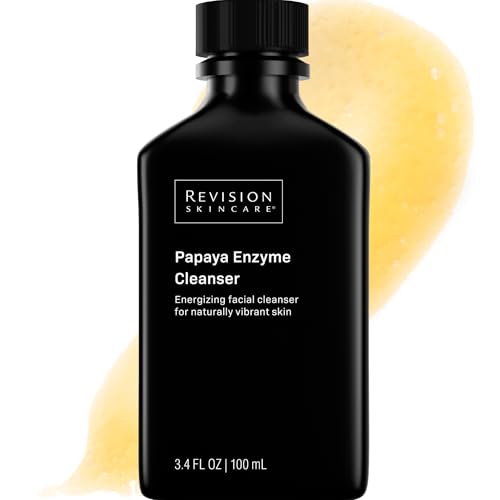
- Energizing facial cleanser for naturally vibrant skin
- Gently polishes away dead surface cells
- Nourishes skin with Papaya Extract, rich in vitamins and minerals
